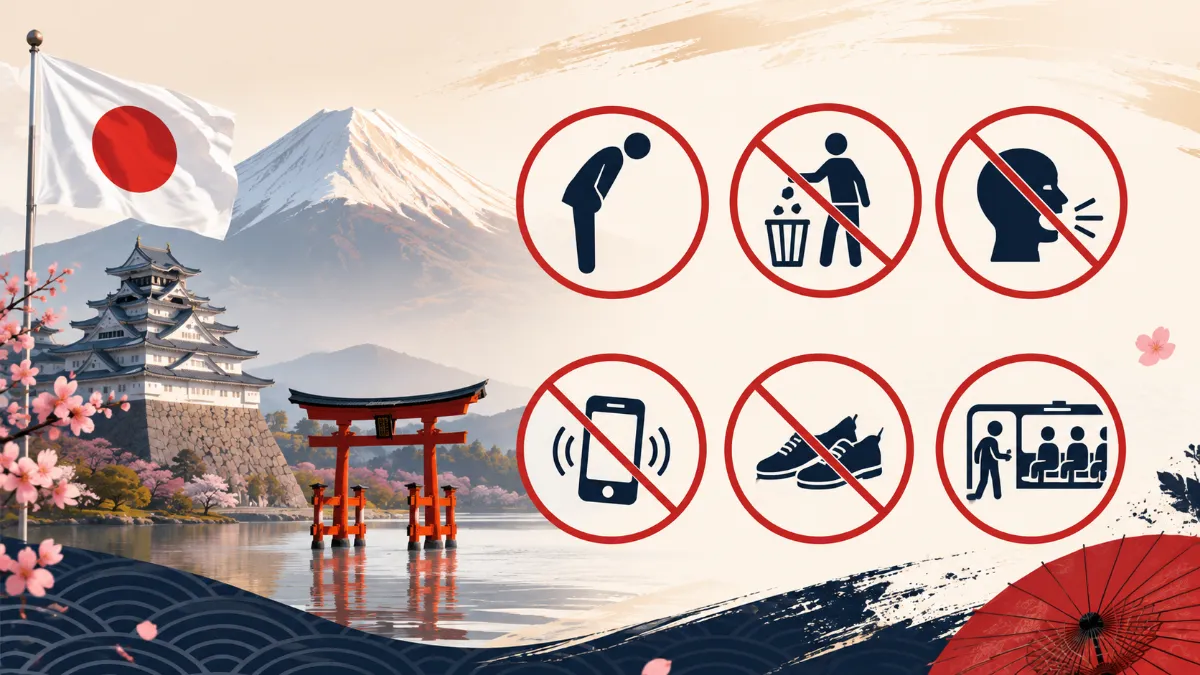
Japanese Rules For Foreigners are easier to follow when you understand the reason behind them. In Japan, everyday culture places unusual emphasis on respect, quietness and cleanliness. Therefore, a visitor who keeps their phone silent on public transport, carries their rubbish and follows local smoking rules will avoid most common misunderstandings. In 2026, foreign residents should also check medication restrictions before travelling because some familiar cold, flu and allergy products may require documentation.
Key points:
- Keep public spaces quiet, especially trains, buses and elevators.
- Carry rubbish until you find an appropriate disposal point.
- Do not leave tips in restaurants or hotels.
- Check medicine rules with Japan’s official health authorities before departure.
Japanese Rules For Foreigners: Where Mistakes Happen
Japanese Rules For Foreigners mainly concern considerate behaviour in shared spaces. In particular, public transport etiquette, waste disposal, dining customs, footwear and smoking restrictions are the areas where visitors most often need guidance. These expectations are usually simple. However, the challenge is noticing them before a local situation makes the rule obvious.
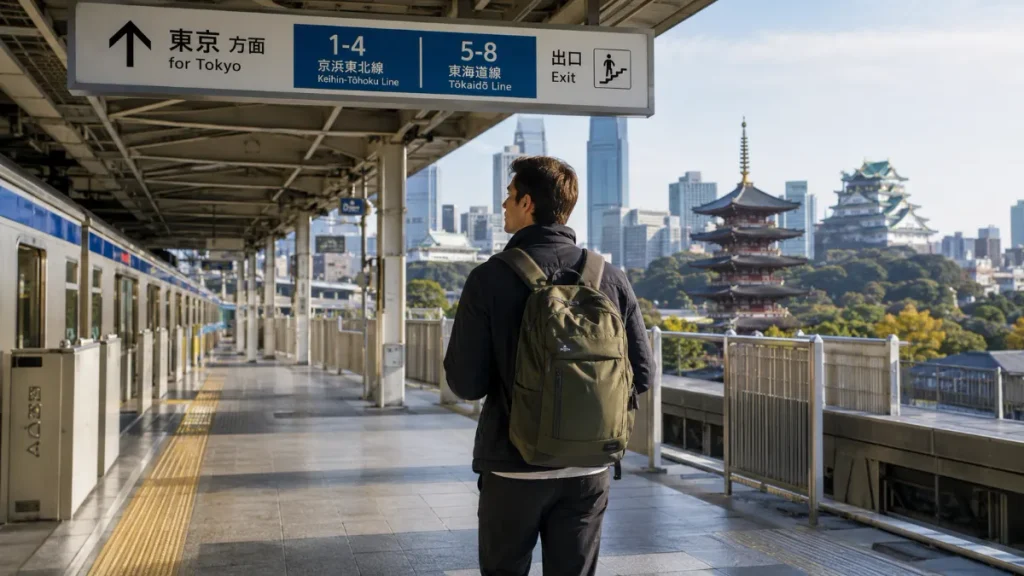
For example, a crowded train may be nearly silent even during a busy commute. As a result, a phone conversation that feels normal elsewhere can attract attention in Japan. Similarly, a snack bought from a vending machine is generally eaten near the machine or shop rather than while walking down the street.
Read More>> Japan Foreigner Entry Visa Fees
How should foreigners behave on transport?
Foreign passengers should use silent mode on their phones and avoid phone calls on trains, buses and elevators. In addition, quiet conversations are preferable in crowded carriages. The goal is to reduce noise in a confined shared space where many people are travelling, working or resting.
Phone use and conversation
Set your phone to silent before boarding. Above all, avoid taking calls inside the carriage. If a call is urgent, move away from other passengers when practical and keep the conversation brief. In elevators, silence is the safest choice because the space is small and shared.
Escalator positioning
Stand on one side of the escalator and leave the other side open. Tokyo usually keeps to the left while Osaka commonly keeps to the right. However, local practice can vary at busy stations, so follow the markings and copy the surrounding crowd rather than assuming one pattern applies everywhere.
Backpacks in crowded trains
Wear or hold a backpack in front of you when the train is crowded. This simple adjustment prevents the bag from striking other passengers and creates more room. Otherwise, a large backpack on your back can occupy valuable space even when the wearer is standing still.
- Switch the phone to silent before entering.
- Do not make calls inside trains, buses or elevators.
- Keep bags low or in front of your body during rush hour.
- Stand behind the marked boarding lines at stations.
In practice, the backpack rule matters most during morning and evening commuter periods. For instance, a visitor with a hiking pack should consider removing it and placing it between their feet when the carriage becomes crowded.
Why is eating while walking discouraged?
Eating or drinking while walking is generally discouraged in Japan because it can create litter, spills and inconvenience in crowded streets. Therefore, finish a snack near the vending machine or store where you bought it. This habit also makes rubbish disposal easier and keeps public paths tidy.
Convenience stores and vending machines often become natural eating points. Nevertheless, do not assume every shop provides seating. Look for a designated area or ask staff politely. During festivals or outdoor events, temporary eating spaces may be available, so follow the event’s signs.
What should you do with rubbish?
Public rubbish bins are uncommon in many parts of Japan. Consequently, carry your waste with you until you return to your hotel or find an appropriate bin. Convenience stores may provide disposal facilities, but visitors should use them respectfully and follow any posted instructions.
Separate items when bins are labelled for different materials. For example, a plastic bottle may need its cap and label removed in some collection systems. Rules differ by municipality, so local signs take priority. This is one of the most practical Japanese Rules For Foreigners because a small rubbish bag can prevent an awkward search for a bin.
What are the main Japanese dining rules?
Japan has a strict no-tipping culture. Instead, leave the exact bill amount unless a clearly stated service charge applies. Extra money can cause confusion because staff may think you forgot your change. Therefore, a polite thank-you is more appropriate than an unsolicited tip.
Chopsticks and rice bowls
Never stand chopsticks vertically in a bowl of rice. The gesture resembles a funeral ritual and is considered inappropriate at the dining table. Instead, place chopsticks on the provided rest when you pause or finish eating.
Passing food from chopsticks to chopsticks should also be avoided because it resembles another funeral custom. If you need to share food, use serving utensils or ask for them. These details may seem small, yet they carry strong cultural associations.
Finishing the food
Order a portion you can reasonably finish. Leaving large amounts of food may suggest wastefulness, especially in smaller traditional restaurants. Meanwhile, slurping noodles is acceptable and can be polite. It helps cool hot noodles while showing that you are enjoying the meal.
Dining customs are not identical everywhere. For example, upscale restaurants may expect quieter table manners while a casual noodle shop can be livelier. Even so, careful ordering and respectful chopstick use remain reliable choices for foreign visitors.
| Situation | Preferred behaviour | Common mistake |
|---|---|---|
| Restaurant bill | Pay the stated amount | Leaving an unrequested tip |
| Rice bowl | Rest chopsticks horizontally | Standing them upright |
| Noodle meal | Slurping is acceptable | Assuming it is always rude |
| Unfinished food | Order a suitable portion | Leaving a large amount behind |
When must you remove your shoes?
Remove your shoes when entering private homes, traditional ryokan rooms and tatami areas. In addition, some temples and schools require visitors to change footwear. Usually, indoor slippers are provided. The boundary between outdoor and indoor space is treated as a cleanliness issue, not merely a dress-code preference.
Look for a raised entrance area, shoe racks or a line of slippers. Then, take off outdoor footwear before stepping onto tatami. Keep socks clean and intact because bare feet may not be suitable in every setting.
Toilets in homes or traditional accommodation may have separate toilet slippers. Use them only in that area and change back afterward. A common mistake is walking from the bathroom into a tatami room while still wearing toilet slippers.
Where can foreigners smoke legally?
Smoking on streets or outside designated smoking areas is illegal in many Japanese districts. Tokyo is a well-known example. Local rules can include fines, restricted zones and separate requirements for indoor venues. Therefore, smokers should look for marked smoking rooms or designated outdoor areas.
Do not rely on the absence of a police officer or a visible sign. Instead, remember that district boundaries can change the rule within a short walk. Hotels, restaurants and stations may each have their own smoking policy as well.
Before lighting a cigarette, check nearby signs or ask staff. Heated tobacco products may also be subject to venue restrictions. For that reason, the safest approach is to use only an unmistakably designated smoking space.
What medication rules apply to visitors?
Some common cold, flu and allergy medicines containing stimulants or pseudoephedrine are restricted or illegal to bring into Japan without proper documentation. However, brand names do not reliably show whether a product is permitted. Therefore, check the active ingredients before packing any medicine.
Japan’s Ministry of Health, Labour and Welfare provides official information about bringing medicines into the country. Review its medicine import guidance for overseas visitors well before departure. When the product or quantity is unclear, contact the relevant Japanese authority or embassy before travelling.
How can travellers reduce medication problems?
- Write down each medicine’s generic name and active ingredients.
- Check whether stimulants or pseudoephedrine are included.
- Keep medicines in their original labelled packaging.
- Carry prescriptions or a doctor’s letter when appropriate.
- Apply for any required permission before flying.
Do not assume that an over-the-counter product is automatically acceptable in Japan. A medicine sold freely in one country may have different import controls in another. Consequently, this is a legal and travel-planning issue, so official confirmation matters more than advice from a travel forum.
Common mistakes to avoid
Most cultural errors come from applying habits from home without checking the local setting. Therefore, the following examples are easy to prevent and especially useful for experienced travellers who move quickly between cities.
- Taking a phone call on a quiet commuter train.
- Eating a snack while walking through a busy shopping street.
- Leaving rubbish beside a full or unavailable public bin.
- Standing on the wrong escalator side without checking local signs.
- Keeping a backpack on your back in a packed carriage.
- Offering a restaurant tip after receiving the bill.
- Placing chopsticks upright in rice.
- Walking onto tatami while wearing outdoor shoes.
- Smoking outside a designated area.
- Packing medicine without checking its ingredients or import status.
One useful strategy is to pause at transitions. For example, check the entrance before entering a home, observe the platform before boarding and scan the table before using chopsticks. Small moments of attention prevent most avoidable mistakes.
Practical tips for a smoother stay
Respect is the organising principle behind Japanese Rules For Foreigners. Quiet conduct protects shared space, clean habits reduce inconvenience and careful observation helps visitors follow local customs without making assumptions.
Keep a small resealable bag for rubbish. Additionally, download offline translation support for signs. Carry medicine details in English and keep your accommodation address available in Japanese. These tools are particularly helpful when travelling outside major tourist centres.
For a first visit, watching what people do is often more reliable than memorising every custom. Still, observation should not replace official checks for smoking restrictions or medication imports. Those rules can carry legal consequences and may differ by place or product.
Frequently asked questions
Is tipping allowed in Japan?
Japan generally does not expect tips. Instead, pay the stated amount and thank the staff. Leaving extra cash may create confusion because it can be mistaken for forgotten change.
Can I talk on my phone on a Japanese train?
Phone calls are best avoided on trains. Therefore, put the device on silent mode and send a message instead. If the call is urgent, move away from other passengers when possible.
Can foreigners eat while walking in Japan?
It is usually better to eat near the vending machine or shop where you bought the item. This reduces spills and litter on busy streets.
Why are public rubbish bins rare?
Many public areas do not provide frequent bins, so carry your rubbish until you reach your hotel or an appropriate disposal point.
Which side should I use on an escalator?
Tokyo usually keeps to the left while Osaka commonly keeps to the right. However, follow local signs and the people around you when the arrangement is unclear.
Do I need to remove shoes at every temple?
Not always. Remove shoes when signs or staff require it, especially near tatami rooms. Some temples and schools provide slippers for indoor areas.
Can I bring my usual cold medicine to Japan?
Not automatically. Some cold, flu and allergy products contain restricted ingredients. Therefore, check the official Japanese guidance before packing and obtain documentation if required.
Where may I smoke in Tokyo?
Use a marked smoking area or smoking room. Street smoking is restricted in many Tokyo districts, and local penalties or boundaries can vary.
Travel with consideration
Following Japanese Rules For Foreigners does not require perfect knowledge of every custom. Instead, it requires attention to shared space, cleanliness and local instructions. Keep public noise low, manage your rubbish, respect dining traditions and verify legal requirements before bringing medicine.
Before departure in 2026, check current guidance from Japanese authorities for medication imports and confirm local rules at your destination. As a result, a few minutes of preparation can make daily travel smoother for you and for the people around you.