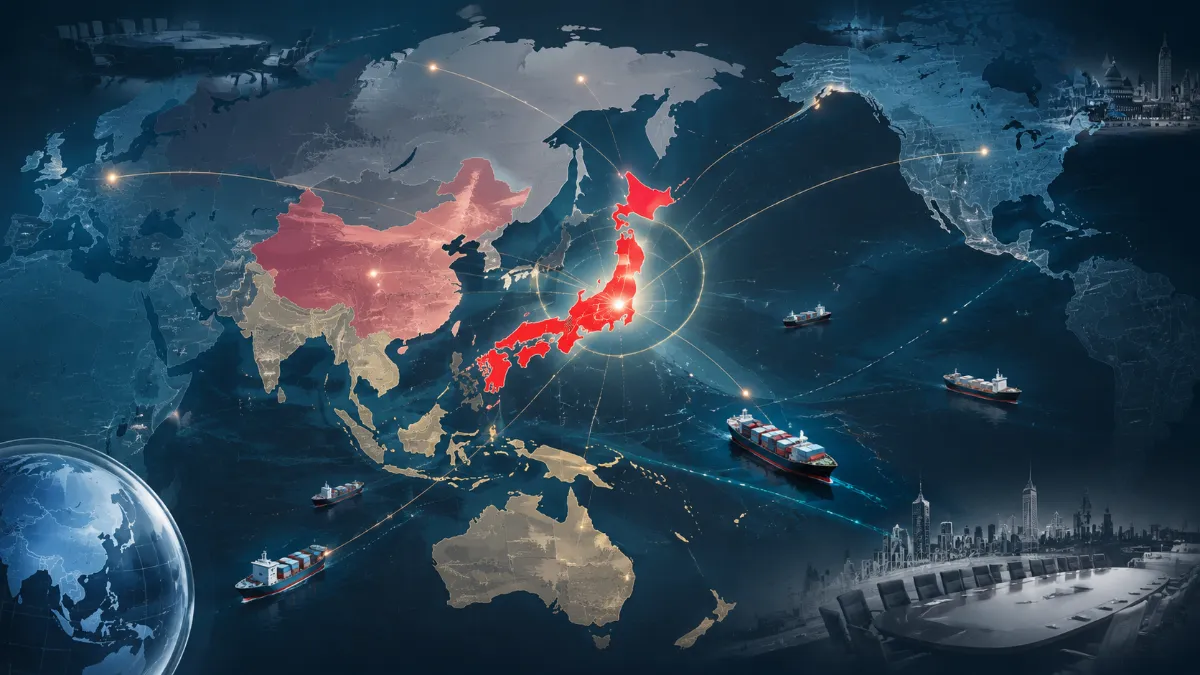
Japan foreign relations are shaped by three connected priorities: the security alliance with the United States, deep economic ties across Asia and active participation in multilateral institutions. In 2026, Japan’s Ministry of Foreign Affairs manages this broad agenda while responding to difficult relationships with China, North Korea and Russia. As a result, its diplomacy combines economic pragmatism with security planning and historical responsibility.
Japan’s position becomes easier to understand when history and current policy are viewed together. The country moved from an East Asian order strongly influenced by China to imperial expansion, wartime defeat, postwar dependence on the United States and a more active multilateral role. That long shift still affects Tokyo’s choices today.
How does Japan foreign relations policy work in 2026?
Japan foreign relations policy is coordinated by the Ministry of Foreign Affairs, commonly known as MOFA. Its central task is to protect national security, sustain trade and energy access, support international institutions and manage disputes without isolating Japan from its neighbors.
Three policy pillars explain most Japanese diplomatic decisions:
- Alliance security: The United States remains Japan’s primary defense and security partner under the bilateral security treaty.
- Regional economic integration: Japan maintains extensive trade and investment connections across East and Southeast Asia.
- Multilateral cooperation: Japan works through the G7, APEC, the United Nations, the OECD and the WTO.
For readers seeking primary material, the Ministry of Foreign Affairs of Japan publishes official statements, country policies and treaty information. Therefore, that source is more reliable than treating older textbook summaries as current policy announcements.
Why is the United States central to Japan’s security?
The United States is Japan’s most important postwar security relationship. Under the bilateral security treaty, an extensive American military presence remains in Japan and Washington is committed to Japan’s defense within the alliance framework.
After Japan’s defeat in World War II, the subsequent American occupation shaped the relationship. During that period, Japan’s postwar Constitution, including its prohibition against militarization, developed. Consequently, the security treaty became a defining feature of Japan’s political and strategic environment.
Economic ties further reinforce the security partnership. The United States is a major market for Japanese exports and an important source of imports, including a significant share of Japan’s food supplies. Although trade friction appeared at intervals from the 1970s, the broader relationship remained close.
The alliance also helped Japan return to international institutions. Washington supported Japan’s membership in bodies such as the United Nations and the OECD. Later, Japan’s participation in global economic governance expanded through organizations connected with trade and development.
What does the alliance mean for Japan’s policy choices?
For beginners, the answer is straightforward: Japan gains a security partner while retaining a strong economic and diplomatic identity. For advanced observers, however, the alliance also creates difficult questions about defense responsibility, host-nation concerns and Japan’s desired role in regional security.
Those questions became more visible after the Soviet Union collapsed. Japan’s economic strength led some Western critics to ask whether Tokyo should accept greater responsibility for its own defense. At the same time, debates over Japan’s wartime conduct continue to influence trust in parts of Asia.
How important are East and Southeast Asia to Japan?
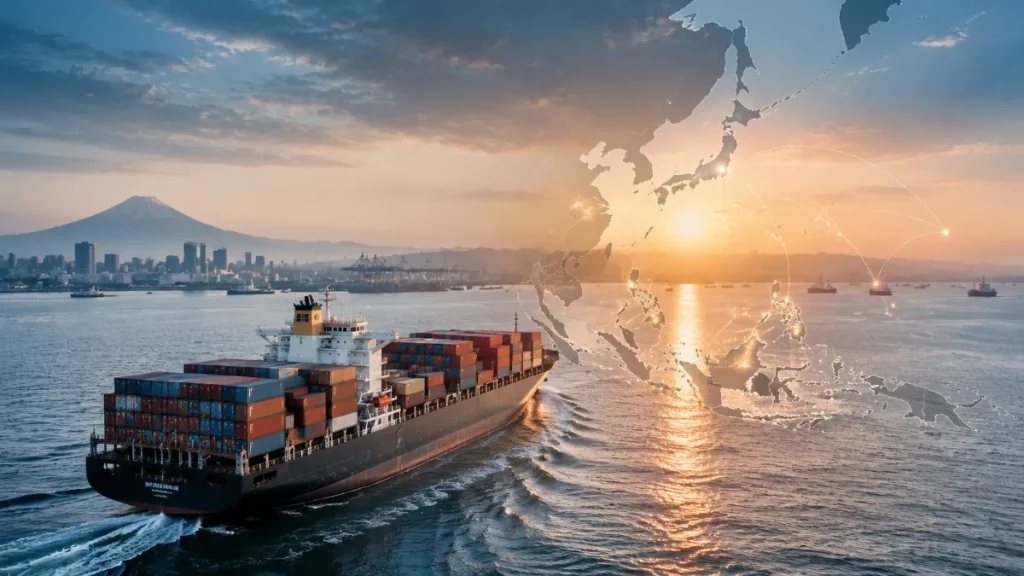
East and Southeast Asia are essential to Japan’s economic security and diplomatic reach. The region supplies markets, food, energy-related materials and industrial inputs. It also creates opportunities for trade, investment and political cooperation.
Japan’s wartime occupation of Southeast Asia caused lasting resentment. As a result, postwar Japanese governments have worked to improve relations with countries across the region. These efforts are not only historical gestures. Southeast Asian states are also major commercial partners and important participants in regional diplomacy.
The supplied historical account identifies Southeast Asia as Japan’s second-largest export market after the United States. It also describes imports of food, oil, metal ore, lumber and rubber. Those figures belong to the source period rather than necessarily to 2026. Nevertheless, they show why the region has long mattered to Japanese planning.
Singapore receives particular attention because it combines strong economic links with diplomatic alignment. For example, a supply-chain disruption affecting factories in Japan could require close consultation with Singapore on trade routes, investment conditions and wider regional stability.
Why do Korea and China require careful diplomacy?
Japan and Korea share cultural connections shaped by Chinese writing, philosophy and religion. However, Japan’s harsh colonization of Korea in the early twentieth century left deep political and social grievances. Therefore, historical memory remains a major factor in Japan–South Korea relations.
China presents a different combination of opportunity and risk. Japan has a long history of cultural contact with China, including the transmission of writing, religious traditions, literature and art. Yet Japan’s invasion of Chinese territory and wartime rule over parts of Manchuria continue to affect bilateral trust.
Japan did not establish diplomatic relations with the People’s Republic of China until 1972, after the United States opened relations with Beijing. Since then, economic cooperation has developed alongside disagreements over maritime and territorial issues.
This dual character is the key to understanding Japan’s China policy. Trade encourages engagement, while regional tensions require caution. Thus, neither total economic separation nor unrestricted trust accurately describes the relationship.
How does Japan manage its major geopolitical challenges?
Japan manages its main geopolitical challenges through a balancing strategy. It keeps communication open where economic or humanitarian interests require contact. At the same time, it relies on alliances, sanctions or international institutions when security risks become more serious.
| Relationship | Main opportunity | Main challenge | Typical policy tension |
|---|---|---|---|
| United States | Security cooperation and trade | Defense responsibilities and military presence | Alliance dependence versus strategic autonomy |
| China | Large-scale trade and cultural links | Maritime and territorial tensions | Economic engagement versus security caution |
| North Korea | Potential dialogue on security and abductions | Missile tests and the absence of formal diplomatic ties | Communication versus deterrence |
| Russia | Limited economic and regional contact | Territorial disputes and strained relations | Dialogue versus sanctions and geopolitical pressure |
Why is China both a partner and a concern?
China is one of Japan’s most complex relationships because economic interdependence exists beside maritime and territorial tensions. Japan has supported Chinese economic development in the past, including through official development assistance. At the same time, Tokyo remains alert to regional security risks.
The historical source records that mainland China sent 18.7 percent of its exports to Japan in 1997, compared with 15.1 percent to the United States. This is a historical data point rather than a 2026 estimate. Even so, it illustrates how significant the commercial relationship once was.
For an advanced analysis, the important issue is not simply trade volume. Japan must also consider sea-lane security, regional confidence, supply resilience and the political impact of historical disputes. These factors explain why Tokyo may cooperate with Beijing in one area while opposing its actions in another.
Why does North Korea remain a security concern?
Japan has no formal diplomatic relationship with North Korea. Its security concerns include missile tests and the unresolved issue of Japanese citizens abducted in the past.
That combination makes diplomacy unusually difficult. Tokyo must protect its population and coordinate with partners. Nevertheless, it also needs channels for addressing humanitarian and political questions. The North Korean issue therefore connects defense policy with family concerns and regional diplomacy.
Consider a sudden missile test. Japan’s immediate priorities would include public safety, information sharing and alliance coordination. In the longer term, policy would still require careful consideration of dialogue, sanctions and the abduction issue.
Why are relations with Russia strained?
Japan’s relations with Russia have been strained throughout much of the postwar period. A central dispute concerns islands occupied by the Soviet Union during the final days of World War II, including islands near Hokkaido claimed by Japan.
Economic contact developed gradually after the war, and Japanese companies participated modestly in some development projects. However, later geopolitical shifts and sanctions connected with European security conflicts placed additional pressure on the relationship.
The island dispute shows why historical geography remains relevant to current diplomacy. A relationship can contain trade, negotiation and political disagreement at the same time. Consequently, Japan’s Russian policy reflects that uncomfortable combination.
What role do the G7, APEC and global institutions play?
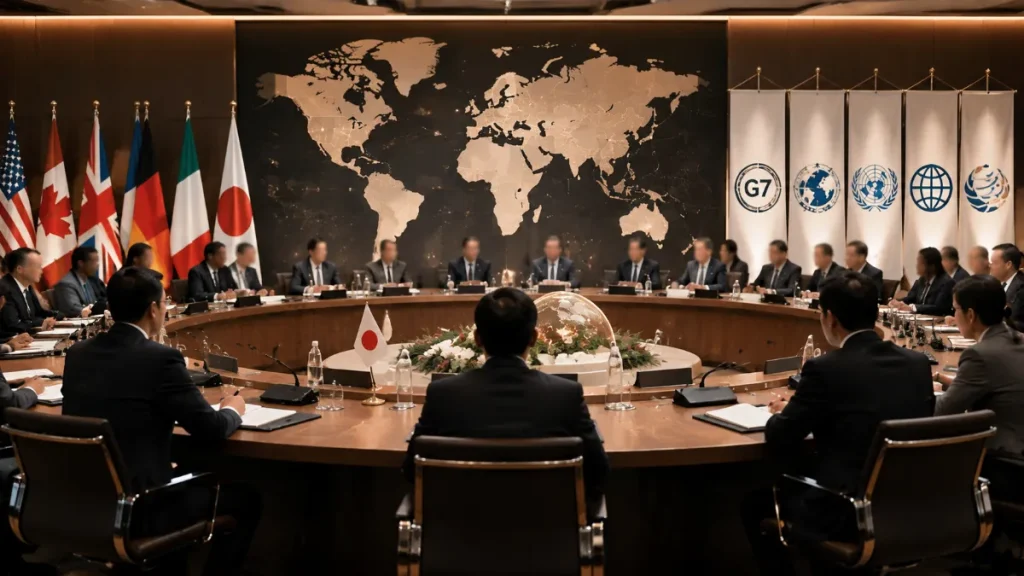
Multilateral cooperation gives Japan influence beyond its immediate neighborhood. Through the G7, APEC, the United Nations, the OECD and the WTO, Japan can address trade, development, international rules and shared security concerns with multiple partners.
These institutions are especially useful when bilateral relations are tense. Japan can support rules-based cooperation without reducing every issue to a direct dispute with one country. For instance, APEC connects Japan with economies across the Asia-Pacific, while the OECD links it with advanced industrial economies.
Japan’s relationship with Europe also fits this wider pattern. The historical source describes the European Economic Community as an important market and supplier of industrial goods. It also notes indirect security links through European countries’ alliance with the United States through NATO.
What are the strengths and limits of Japan’s diplomatic approach?
Japan’s foreign policy has clear strengths, but it also carries limitations. Therefore, understanding both sides prevents an overly favorable or overly negative assessment.
Strengths
- The United States alliance provides a durable security foundation.
- Trade links with Asia support economic resilience and diplomatic access.
- Participation in global institutions gives Japan a voice in international rule-making.
- Foreign aid and development cooperation can improve long-term relationships.
- Japan can combine historical awareness with practical economic engagement.
Limits
- Dependence on the United States can restrict strategic flexibility.
- Historical grievances continue to complicate relations with Korea and China.
- Energy dependence makes instability in the Persian Gulf especially important.
- Territorial disputes with Russia remain unresolved.
- Balancing trade with China against security concerns requires constant adjustment.
The Persian Gulf illustrates the economic side of this challenge. The historical account states that petroleum and petroleum products made up one-third of Japanese imports from the region during its source period. Because those figures are historical, current energy data should be checked through official Japanese statistics before publication.
What common mistakes should readers avoid?
A weak explanation of Japan foreign relations often treats the country as either fully dependent on Washington or completely independent. In reality, neither view captures the layered nature of Japanese diplomacy.
- Do not treat historical figures as current statistics. The 1997 China trade figures are useful context, not evidence for 2026.
- Do not separate economics from security. Trade routes, energy supplies and maritime tensions often affect the same policy decision.
- Do not ignore historical memory. Japan’s wartime actions remain relevant to relations with several Asian countries.
- Do not describe multilateral membership as symbolic only. The G7, APEC, OECD, WTO and United Nations provide practical diplomatic channels.
- Do not reduce every dispute to military power. Development assistance, trade and negotiation also shape Japan’s influence.
What expert framework helps explain Japan foreign relations?
A useful framework has four questions: what security risk is involved, what economic interest is at stake, which historical memories influence trust and which institution can help manage the issue? This method works for both beginner-level study and advanced policy analysis.
For example, China requires all four questions. Security concerns involve maritime tensions, economic interests involve trade, history affects public trust and multilateral institutions provide channels for communication. The same framework can also be applied to North Korea, Russia or Southeast Asia.
Students can use this approach to examine Japan’s position on conflicts involving Israel and Arab states, United Nations pressure concerning human rights in China or the possible reunification of North and South Korea. In each case, the central task is to connect Japan’s stated position with security, commerce, history and international rules.
What should readers remember about Japan foreign relations in 2026?
Japan foreign relations are neither purely alliance-based nor purely commercial. Japan uses the United States alliance for security, Asian partnerships for economic connection and multilateral institutions for wider influence.
Its hardest problems come from overlapping pressures. China is economically important but strategically complicated. North Korea creates direct security and humanitarian concerns. Meanwhile, Russia remains difficult because of territorial disputes, sanctions and wider European security tensions.
Japan’s diplomacy is therefore best understood as managed interdependence. The country seeks cooperation without ignoring risk, and it uses history to explain present caution. That balance will remain central to Japan’s role in the world during 2026.
Frequently asked questions about Japan foreign relations
Who manages Japan’s foreign relations?
Japan’s Ministry of Foreign Affairs manages the country’s foreign relations. It develops diplomatic policy, handles international negotiations and coordinates relations with governments and multilateral organizations.
Who is Japan’s main security partner?
The United States is Japan’s primary security and defense partner. Their bilateral security treaty supports American military presence in Japan and forms the foundation of Japan’s postwar security policy.
Does Japan have diplomatic relations with North Korea?
No. Japan lacks formal diplomatic ties with North Korea. Missile tests and the unresolved abduction issue remain major concerns in the relationship.
Why are Japan and China both partners and rivals?
Japan and China share long cultural and economic connections, but their relationship is affected by Japan’s wartime actions, maritime tensions and territorial disagreements. Consequently, economic engagement exists alongside strategic caution.
Why are Japan’s relations with Russia strained?
Relations are strained because of territorial disputes involving islands near Hokkaido, historical disagreements and newer geopolitical tensions linked to European security conflicts and sanctions.
Which international organizations are important to Japan?
Japan engages actively with the G7, APEC, the United Nations, the OECD and the WTO. These organizations support cooperation on security, trade, development and international governance.
Why does Southeast Asia matter to Japan?
Southeast Asia matters because it provides important markets and supplies such as food, oil, metal ore, lumber and rubber. In addition, Japan works to strengthen ties after the region’s painful experience of wartime occupation.
How can students analyze Japan’s foreign policy?
Students can examine each issue through four factors: security interests, economic priorities, historical memory and the role of international institutions. This framework helps explain why Japan may support dialogue in one area while taking a firmer position in another.