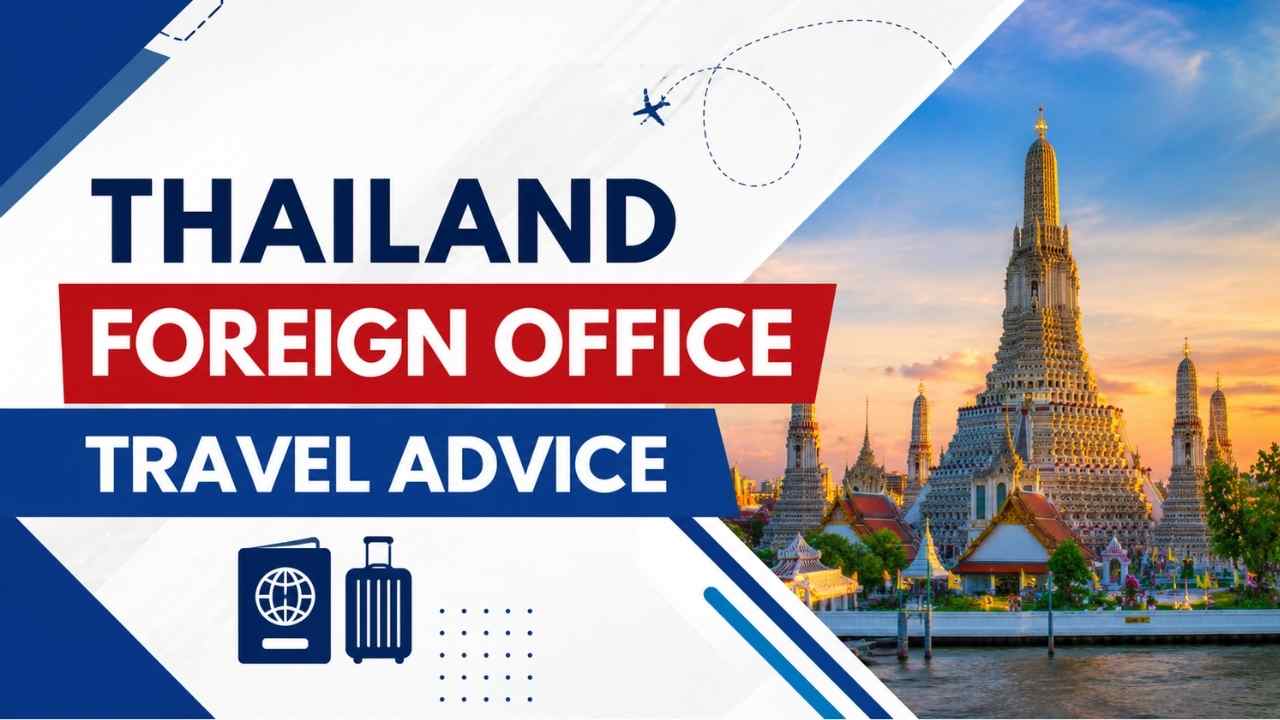
Thailand foreign office travel advice matters if you are planning a trip in 2026 because the latest FCDO guidance does not treat every part of Thailand in the same way. Most holiday plans require careful preparation rather than cancellation, but travel near the Malaysia and Cambodia borders carries specific warnings. Therefore, the safest approach is to check your route, passport, entry documents, insurance and planned activities before departure.
The UK Foreign, Commonwealth & Development Office guidance was still current on 19 August 2026 and was updated on 30 June 2026. This article explains the supplied FCDO information in practical terms. It is written mainly for British citizens travelling on a full British passport, while other nationalities should instead confirm their own government’s advice and Thailand’s entry rules.
- FCDO advises against all but essential travel to parts of southern Thailand near Malaysia.
- Similarly, travel within 20 kilometres of the Thailand-Cambodia land border is discouraged except when essential.
- Thailand Digital Arrival Card registration is required for foreign nationals arriving by air, land or sea.
- In addition, passport validity, visa limits, insurance and local laws deserve attention before booking activities.
What does thailand foreign office travel advice say about Thailand in 2026?
The current advice is regional rather than a blanket warning against visiting Thailand. Specifically, FCDO advises against all but essential travel to selected southern provinces and areas within 20 kilometres of the Cambodia land border. Elsewhere, travellers should monitor local conditions, avoid demonstrations and keep suitable insurance for their itinerary.
That distinction is easy to miss when reading a short travel alert. For example, a route from Bangkok to Phuket is not the same risk profile as a journey through the far south or a border excursion. Therefore, map your exact destinations instead of relying on Thailand’s overall reputation as a tourist destination.
Read More: Thailand Foreigner Buy Land
Why the advice is not identical for every traveller
FCDO travel advice is designed to help British nationals make informed decisions about overseas risks. Meanwhile, entry rules are set and enforced by Thai authorities, while other governments may issue different wording or regional guidance. Travellers from India, Bangladesh, Australia, the United States or elsewhere should therefore check their own foreign ministry before departure.
For a reliable reference, read the official FCDO Thailand travel advice. Also, use it alongside the Thai Embassy or Thai Immigration Bureau information for entry questions, since a foreign ministry does not replace the country’s immigration authority.
Which parts of Thailand should travellers avoid?
Travellers should avoid non-essential journeys to four southern provinces and four specified districts near the Thailand-Malaysia border. In addition, FCDO advises against non-essential travel within 20 kilometres of the Thailand-Cambodia land border, where fighting, artillery fire and unexploded landmines have created serious risks.
| Area | FCDO advice | Main stated concern |
|---|---|---|
| Pattani, Yala and Narathiwat | Avoid all but essential travel | Regular attacks and separatist violence |
| Chana, Thepa, Na Thawi and Saba Yoi in southern Songkhla | Avoid all but essential travel | Security incidents near the Malaysia border |
| Hat Yai to Padang Besar train line through the listed provinces | Avoid all but essential travel | The route passes through affected southern areas |
| Within 20 kilometres of the Cambodia land border | Avoid all but essential travel | Armed clashes and unexploded landmines |
Thailand-Malaysia border risks
Pattani, Yala and Narathiwat have experienced regular attacks. The warning also covers Chana, Thepa, Na Thawi and Saba Yoi in southern Songkhla Province. Moreover, the Hat Yai to Padang Besar train line is included because it runs through the affected provinces.
A budget-conscious traveller may be tempted to use this train route because it can appear convenient on a map. However, the practical mistake is treating transport cost as the main decision factor. If the itinerary crosses a warned area, choose a route that avoids it unless the journey is genuinely essential.
Thailand-Cambodia border risks
Fighting occurred along parts of the border in July 2025, followed by further clashes in early December involving rocket and artillery fire. As a result, land borders and crossings between Thailand and Cambodia remain suspended in the supplied guidance. Unexploded landmines are another reason to stay away from affected border areas.
Several tourist sites close to the border are closed, including Khao Phra Wihan, also known as Preah Vihear, Ta Kwai or Ta Krabey and Ta Muen Thom or Tamone Thom temples. Therefore, do not assume a tourist attraction is safe simply because it appears on an older itinerary.
What documents do you need to enter Thailand?
Foreign nationals entering Thailand by air, land or sea must complete the Thailand Digital Arrival Card, or TDAC, online within the three days before arrival. British passport holders also need a passport valid for at least six months after arrival with at least one blank page, while visa conditions depend on the purpose and length of the visit.
TDAC registration and passport checks
TDAC applies to all foreign nationals under the supplied information. Accordingly, complete the registration through the official Thai system within the permitted three-day window before arrival. Keep the confirmation accessible with your travel documents, and check every detail before submitting it.
Your passport must not be reported lost or stolen. Otherwise, immigration can refuse entry when a traveller lacks a valid document. Dual nationals should generally leave Thailand using the same passport used to enter, which can reduce confusion at immigration.
Visa duration and overstaying
For British citizens, the supplied guidance says tourism, business engagements and urgent or ad-hoc work may be permitted for up to 60 days under the relevant visa category. An extension of up to 30 additional days may be possible. However, work, study and other purposes require the appropriate visa before travel.
Overstaying can cost 500 Thai baht per day, up to a maximum of 20,000 baht. The consequences may also include detention, deportation at your own expense and a re-entry ban of up to 10 years. Consequently, these figures make a simple calendar check worthwhile before your permitted stay ends.
How can you reduce everyday safety and legal problems?
Follow local laws, avoid political demonstrations and carry your original passport as required under Thai law. In particular, pay attention to cannabis, controlled substances and comments about the Thai royal family. A small misunderstanding can become a legal problem when a visitor assumes familiar rules apply in Thailand.
Cannabis and prohibited items
The latest FCDO update includes information about cannabis. It is illegal to carry cannabis out of Thailand, including when transiting through another country. Furthermore, airports may use advanced baggage screening, and travellers caught with cannabis can be arrested or fined.
Do not place cannabis products in checked luggage or hand luggage when leaving Thailand. The same caution applies to any substance whose legal status you do not fully understand. Customs rules also restrict goods entering or leaving the country, so declare items that may be prohibited or subject to tax.
Royal family comments and public demonstrations
Insulting or defaming the Thai royal family is a serious offence under Thai law. Therefore, avoid negative public or social-media comments about the monarchy. Political rallies and large gatherings in Bangkok or other major cities should also be avoided because conditions can change quickly and crowds may become violent.
The practical rule is simple: do not join a demonstration, do not stand close to one to take photographs and do not assume a peaceful crowd will remain peaceful. Instead, follow local instructions if roads, stations or public spaces are closed.
Why does travel insurance matter under this advice?
Travel insurance may become invalid if you travel against FCDO advice. For that reason, choose a policy that covers your full itinerary, medical treatment, emergency expenses and planned activities. Border excursions, adventure activities and transport disruptions should be checked specifically rather than assumed to be included.
Insurance wording matters most when a trip includes a warned area. For example, a traveller who adds a Cambodia-border temple visit after buying a policy may discover that the activity falls outside cover. Therefore, read exclusions before payment and retain the policy documents offline.
Travel disruption and transit planning
Escalation in the Middle East has caused wider travel disruption, including airspace closures, cancelled flights and delays. Even when Thailand is not affected directly, a journey through another country may be interrupted. Accordingly, check every transit country, contact the airline or tour operator and confirm that your policy covers the revised route.
If disruption affects your Thai visa plans, consult the guidance published by the Thai Immigration Bureau. Conditions can change, so an airline notification or social-media post should not be the only source used for an immigration decision.
What should you check before leaving home?
A short pre-departure checklist can prevent the most expensive mistakes. First, confirm your passport date, TDAC timing, visa category, insurance exclusions and regional route. Then save official contact details and copies of important documents where you can access them without an internet connection.
- Check that your passport remains valid for at least six months after arrival and has a blank page.
- Confirm whether your purpose of travel requires a visa before departure.
- Complete TDAC within three days before entering Thailand.
- Remove cannabis and other questionable items from all baggage.
- Review your route against the Malaysia and Cambodia border warnings.
- Check transit-country rules if your flight connects through another country.
- Register for official travel-advice email alerts and monitor airline updates.
Yellow fever certification is required when arriving from a country listed as a transmission risk. Additionally, the supplied guidance mentions health screening for travellers from affected Ebola regions, including possible quarantine or self-isolation of at least 21 days. Verify current health requirements with an authoritative medical travel source before flying.
Common mistakes to avoid
- Using a passport with less than six months’ validity.
- Completing TDAC too early or forgetting it entirely.
- Assuming a visa-free or tourist stay automatically covers paid work or study.
- Booking a border excursion without checking whether crossings remain suspended.
- Carrying cannabis during departure or an international transit.
- Believing insurance covers travel to every location regardless of official warnings.
Frequently asked questions about thailand foreign office travel advice
Is Thailand safe to visit in 2026?
Thailand remains accessible, but safety advice differs by region. Therefore, avoid non-essential travel to the listed southern provinces and areas within 20 kilometres of the Cambodia border.
Do all visitors need a Thailand Digital Arrival Card?
Under the supplied guidance, all foreign nationals arriving by air, land or sea must complete TDAC online within three days before arrival.
How long must my passport be valid for Thailand?
Your passport should remain valid for at least six months after the arrival date and contain at least one blank page. Check it before booking flights.
Can I take cannabis out of Thailand?
No. Carrying cannabis out of Thailand is illegal, including during transit through another country, and may result in arrest or a fine.
What happens if I overstay in Thailand?
The stated overstay fine is 500 Thai baht per day up to 20,000 baht. In addition, detention, deportation and a re-entry ban of up to 10 years are also possible.
Can I visit temples near the Thailand-Cambodia border?
Several sites are closed and the surrounding area has unexploded landmine risks. Consequently, follow the current FCDO warning and avoid affected border regions.
Does FCDO advice apply to every nationality?
FCDO guidance is intended primarily for British nationals. Other travellers should check their own government’s advice and confirm Thai rules with the relevant embassy.
What should travel insurance cover?
Choose cover for medical care, emergencies, your complete route and planned activities. Also, check exclusions for destinations under an official travel warning.
Conclusion
The clearest lesson from the 2026 thailand foreign office travel advice is that location matters. A carefully planned visit can avoid the warned border regions, political gatherings and legal pitfalls while preserving flexibility for ordinary tourism. However, check official sources immediately before departure because security, border and entry conditions can change.
Before travelling, verify the latest FCDO notice, Thailand’s official entry requirements and your insurance wording. Then keep your passport secure yet available, complete TDAC at the correct time and remove any prohibited item from your luggage.